

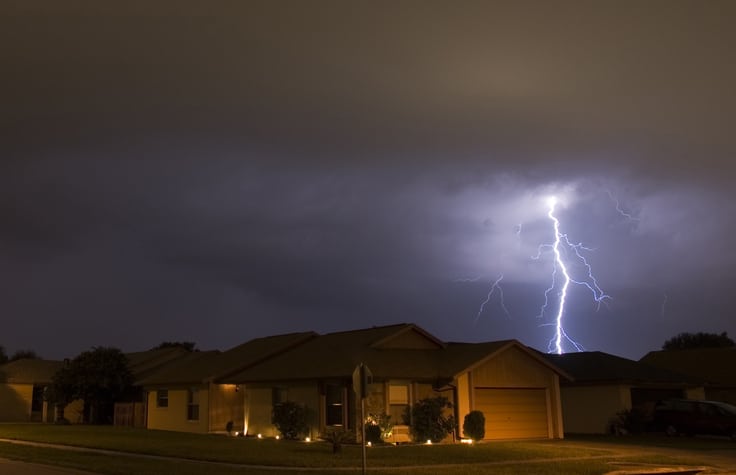
Storms have a way of revealing problems you didn’t know your roof had. What looked like a perfectly fine roof before a storm can suddenly have leaks, missing shingles, or damaged flashing once the weather clears. Knowing how to respond quickly and smartly can mean the difference between a minor repair and a much more serious problem down the road.
Wait for the Storm to Pass
It might be tempting to get up on the roof the moment the storm clears, but it’s not the right idea. Instead, let a professional roofer inspect your roof safely after the storm passes.
Start With a Ground-Level Inspection
You don’t have to climb onto the roof to get a good initial read on the damage. Walk the perimeter of your home and look for obvious signs of trouble. Things to watch for include looking for missing, cracked, or curled shingles, sagging sections along the roofline, and dented or bent gutters.
Take photos of everything you notice. These will be useful when filing an insurance claim or talking to a roofing contractor.
Check the Interior of Your Home
Some roof damage shows up inside before it’s obvious outside. Climb up into your attic after the storm and look for water stains, damp insulation, or any light coming through the roof boards. Inside the home, check ceilings and walls in upper-level rooms for water spots or discoloration. Catching interior moisture early prevents mold and structural damage from taking hold.
Contact Your Insurance Company
If the damage looks significant, reach out to your homeowner’s insurance provider sooner rather than later. Most policies cover storm-related roof damage, but there are usually deadlines for filing claims. An adjuster will typically come out to assess the damage in person. Having your photos and a written record of what you observed will help support your claim.
Get a Professional Roof Inspection
Even if the damage looks minor from the ground, it’s worth having a qualified roofing contractor take a closer look. Some types of damage, like compromised underlayment or subtle flashing issues, aren’t visible without getting up on the roof. A professional inspection gives you a complete picture of what needs to be repaired and helps you prioritize the work.
Don’t put off repairs. It’s easy to ignore storm damage and save repairs for another day, but delays can cost you. Even a little damage to your roof can lead to rot, mold, and insulation damage that far exceeds the cost of the original repair. Acting quickly after storm damage is one of the best things you can do to protect your home and keep repair costs manageable. If you have concerns or require roof repair services, contact Point Roofing in Boise, ID.